Thursday, 24 September 2009

10 sounds that shaped the music industry


With the advent of Electronic music, it's much easier to copy sounds - a simple cut and paste and you'll have exactly the same music as someone else, but which sounds have been copied and pasted the most?   Which sounds have people overused to the point where they've become intrinsic to the popular music industry?

Let's find out...

Amen Break - You can't deny that the Amen break is one of the most overused samples of all time.   Deep rooted in Hip Hop and nigh-on essential in Jungle and Drum and Bass, this sample has been the foundation for many a popular track!

808 Kick - Often backing up the Amen break, the 808 kick began its roots in a humble drum machine and has now spread the world over as one of the most used kick drums ever.   Hip Hop thanks you, 808!

TB 303 Synth - Fast sequenced resonant synths were the order of the day when acid house and trance kicked off, with the TB 303 being the chef.

Supersaw - Could you imagine conventional music without the massive anthemic trance leads of the 90s being punctuated throughout it?   It'd be like losing a limb!   With an awesome name as well, the supersaw synth is vital to the dance music industry!

Orchestra Hit - From the early electronica to 90s Pop music to even more alternative artists (Biffy Clyro - Living is a Problem uses it more than anyone I've heard!), the orchestra hit has been the pitched noise of choice to power out those anthems.   I can't imagine Britney singing about not being that innocent without them.

Gated Snare - Thanks to the 80s, these reverby monsters of snare drums have been the driving backbone to many a Rock and Pop anthem.

Percussive Blip - Yeah, I'm looking at you, Timbaland.   Those early drum machine blips have become such a staple in hip hop that you'd think they weren't pitched samples at all.

Reese Bass - Kevin Maurice Saunderson has shaped modern Drum and Bass forever with his dirty, powerful bass synth.


Vocoder - Would daft punk even exist without this?  Pioneered by Bob Moog, Kraftwerk and others, used so much in pop music it almost hurts.

The Big Beat - Another one of those samples that pops up again and again - Run DMC, Naughty By Nature, Jay-Z and Dizzee Rascal have all spat over the top of this loop.   Whether you think of spitting as a synonym for rap or a derogatory thing is up to you!

Tuesday, 22 September 2009

A chat with Art G from GForceBeats....


Art G is a new exclusive recruit at Prime Loops, and a very talented producer, with his new label 'G Force Beats' backed by Prime Loops, he is on the rise with his upfront, twisted yet catchy style...We met with Art G to find out more...

Tell us a bit about yourself, how long have you been producing, what styles of music are you into, and how did it all start?

Well, it all started since school about 16 years ago. Just started to play guitar and write my own songs. So that evolved into music producing for other artists as well about 10 years in Lithuania. By this point, I had some tracks on top of major radio lists and won the talent competition on 'M-1" radio in 2000. So I started my career as a free lancer producer, and finally ended up being in London...
It was 1998 when i started to go deeper into music programming, using software based synthesizers... as for my own music I was pretty underground, but working with major labels gave my good chance to produce pop artists and mainstream stuff too. This was great for learning more styles and genres. I was producing styles of music from dance, house, techno, drum & bass, chillout, pop, rock and even metal! So that got me into feeling particular styles, and getting my mix nailed.

What was your main focus, and vibe behind the production of your new sample pack 'Mix Injections'?

The main idea was to create a catchy and melody based sample library. I included automated music loops for inspiration, then all divided parts can be manipulated individually. Let's say, for example, the bass line can trigger a whole new idea for the song! There are many abstract sample packs in the market, but I just wanted to put bit of melody in... I think that's what drives people :)

If you could name 5 Artists who have really influenced you along the way who would they be?

Pink Floyd , Radiohead, Depeche Mode, Brian Eno, Aphex Twin and Bruce Parker ;-)... 'cause this is the only artist i can chat for 2 hours on the phone!
but I dance my ass off listening to Prodigy, Daft Punk, Monolake, Trentemoller, Underworld, D Ramirez and so on...

What setup do you have? What synths and Software are you using at the moment?

I am pretty comfortable in Ableton Live and Logic. Ableton is a great tool for live performance and manipulating samples. Logic has a great sound source and midi editor. As for sound design Reaktor is my secret tool.... this 'guy' helps me a lot and most of the time I spend experimenting with sound using Reaktor. As for plugins i use TC PowrCore as they are industry standard plugins, but all the magic happens in GForceBeats studio, owned by my friend and business partner Bruce Parker. Front and back end analog gear helps in designing worm punchy and fat round sounds out of simple Logic's Klopfgeist! lol :)))

What do you think is next for the music scene? 

....let's stayed tuned and see what happens!

Any finally, any comments on your sample pack?

The goal of this library is to help u be inspired...with the help of GForceBeats and Prime Loops libraries and tutorials, your music can shake the room and rock the radio stations!

Mix Injections is availble Now at Prime Loops.


Monday, 21 September 2009

5/5 for Planet of the Orchestra...

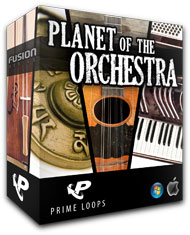
Saint Joe from soundsandgear.com just reviewed our 'Planet of the Orchestra' Release...check out what he has to say:

We are back again with another soundhound, and this time we are taking another look at the folks over at primeloops.com.
Previously we took a look at their human beat box sample kit, which was superb.
We know they can do drums and percussion well, but what about other sounds?

Planet-Of-The-OrchestraPlanet of the Orchestra is your own exotic record collection...

You know I'm always on the lookout for a funky groove, loop, or lick to chop up.
But not just funk, I want anything that will spark my creativity, so I was excited about this release from primeloops.
From the website:

Imagine if the best Orchestra's most talented musicians and top artists from India, America, Africa, Japan, Australia, Europe and China all got together in one huge recording facility, and jammed together...the result? Planet of the Orchestra.

Sounds like a good musical gumbo to me! I had to check this out, especially because I like strings, as well as exotic other-cultural musical riffs.


It's like having you own collection of rare world, etchnic, and orchestral records...and not having to pay any sample clearance!

The real question is how does it sound...

You know around here we like to cut to the chase. I'm going to be honest, before I reviewed it I wasn't expecting too much, I'm used to reviewing things with hundreds and hundreds of sounds, so seeing this was only 100+ had me a little concerned.

All that concern turn into ecstatically bubbly ear orgasmic pleasure when I heard the sounds. Yeah, I made up that phrase, but so what, it's how I felt...don't judge me lol.

The sounds in this collection are unlike anything I've ever heard, they are not merely loops, but each one is a fully produced masterpiece of sound and emotion.

I have never come across a collection this diverse and well recorded. I feel like I have mastered copies of studio recordings from some of the greatest sessions on earth.

The sound is second to none...

primeloopsWhat about the diversity or style, is it usable?

If you can't use this to make something magical then quit... seriously.

There is sooooooooooooo much in this collection I really don't know where to start, or stop...I can go on for days.

Like I said, you get fully produced mini masterpieces in each and every loop, you never know what to expect.

One loop may take you to the jungles of Africa, another to the palaces in China, while the next takes you to a Kentucky back yard, followed by an elegant concert hall orchestra performance.
It's really like a box of chocolates....freaking amazing.

If you love your music and love to be creative get this NOW

I'll admit, I'm an optimist. I feel I can use pretty much anything to spark some creative compositions. But every once in a while I come across things that are absolutely a MUST HAVE, and this is one of them.

Really, the level of detail and professional production put into each one of these loops is simply astonishing.

Like I said before, each one is pretty much a full masterpiece in itself. Ready to become the foundation for your next epic adventure, or peaceful serenade.
Whatever you want to do, wherever you want to go, you'll find something in here to help you get there.

5subs

I have to give this collection a 5/5 subs, it's THAT good, really.

What I like is how well produced each loop is.

This is not like a collection of loops that all play off of each other, no sir.

This is like a collection of 100+ rare orchestral, world, and exotic samples ready to go into your music.

Go checkout planet of the orchestra, peep the demos, then try and call me a liar....you won't be able to.
primeloops has done something wonderful for the music community, I suggest you appreciate it

Thursday, 17 September 2009

8-Bit to 32-Bit

When it comes to your music, you want Quality over Quantity. But how do you measure the quality? Let's find out...

Audio come in several different shapes and sizes. Bit Depth is one of the more important sizes - It determines how much dynamic range you can get from your audio.

Don't confuse it with Bit Rate; they are two different things - Time for an analogy. If you have a river (Okay, not many people can relate to actually owning a river, but you can pretend you are horrendously rich so you can afford to buy one to understand this concept better. It's fun, right?) the bit depth would be the depth of the river - how much water it is capable of holding, while the bit rate would be how fast the water can flow through a section of the river in a second.

But yes - for this article I'll explain about bit depth and why it's useful to know about it.


From lo-fi to hi-fi

Inevitably, technology has to start out small - so it was that many of the original samplers began with 4 bit and 8 bit sound qualities - not exactly ideal for immense, dynamic soundscapes, but it did the job for much of the early electronica.

In fact, some people love the lo-fi-ness of these samplers that they'll go out of their way to reduce the quality just to replicate that old school sound.


Evolution of quality

But as with all technology, it's not long before the Japanese make it better.

Samplers such as the Akai S1000 broke the mould, with the advent of 16 bit audio bit depth and features such as time stretching allowing the birth of jungle music as people could finally speed up their amen breaks to their hearts content.

Incidentally, do you know what's important about 16 bit? This is the quality of CDs, allowing people to hear much more from their music...


16 bit CD quality

"Why does it have to be 16 Bit?" you might ask - well, it doesn't, but Sony insisted on it. Philips and Sony, the two companies developing CD technology were arguing about 14 bit or 16 bit respectively - Sony obviously won, but Philips vowed revenge. Not really - they just made their 14 bit Digital/Analogue converters increase their quality by oversampling, and everyone lived happily ever after... or did they?


Data size

As internet connections are getting better, hi definition audio is more common. The website Soundcloud and even the popular music streaming program Spotify are now providing 160kbs minimum quality mp3s to their users. There must be a reason, right?


Is it possible to hear 24 bit?

There is a reason people have been upgrading to 24 bit systems. Most current digital to analogue audio converters only have a maximum dynamic range of about 120dB. The Rule of Thumb says that for every 1 bit of bit depth, you get another 6dB of dynamic range. If your maths is as sharp as a sawtooth wave, you should be able to figure out that 16 bit equates to 96dB of Dynamic range - not filling up the possible range - there's another 24 dB of potential dynamic range there.

With 24 bit, that equates to 144dB of potential range, filling it up nicely and definitely making a difference - your massive bass drops will hit 25% harder with 24 bit. That's 25% extra punch-in-the-face from every kick drum and 25% extra headroom for moving between quiet, delicate harmonies and intense electronic breakdowns.


What is 32 bit floating?

As audio technology pushes even harder to replicate the real world, higher bit depths are called for. 32 bit and even 64 bit audio are now available on audio programs such as Sonar and have been for several years now.

You might wonder what the point is if only 120dB is available and 24bit is already 24dB over that limit - well that 120dB limit only applies to most sound cards. ASIO sound cards, for example, allow much higher bit rates to shine and as technology develops, you can bet on even higher bit depths becoming standardised.

So - are you going to stick with the old school or spring for that extra punch-in-the-face-ness that the higher bit depths offer?

Wednesday, 16 September 2009

How England Influenced The Music Industry

England is a veritable breeding ground for new electronic music genres. Let's flick back through the pages of time and see what England has provided us...

The Rave Scene


The UK Rave scene brought many genres of music into the eye of the mainstream - parties involving lights, liquor and lots of illicit substances helped people to appreciate the more repetitive styles that much more.

Acid House


A perfect example - Acid House technically started out in Chicago, but it died out quickly - Britain was the country that picked it up, dusted it off and spun it at the rave parties that brought it back. It is a harder sound than conventional house music - with the Roland TB-303 synth/sequencer being a massive stereotypical part of the acid style. The parties that hosted this kind of music had to eventually move, as after-hours clubbing became illegal in Britain, to warehouses and abandoned buildings as illegal raves were the only place people could get their fix of intense clubbing.

Drum and Bass / Jungle


Out of Acid House sprang Jungle music - where British producers decided to speed up the popular and sampled-to-death amen break up to about 160bpm and put some squelchy basslines over the top. Once again, this genre was popularised as a result of rave parties that craved a change from the 4-on-the-floor beats saturating their dance floors.

UK Garage


Make sure you're pronouncing it right - "Gar-idj" not "Gar-ahj" - this is from Landan, mate! UK Garage is the term which describes a lot of styles, such as 2-step, a more hip hoppy take on the popular electronic music of the early 90s. Generally it's a minimalistic syncopated, funky drumbeat interspersed with MCs sporting a heavy London accent. Another one is "Speed Garage" - a faster take on the genre, often with syncopated basslines and sped up vocals, often with the pitch increased as a result.


Grime


The evolution of UK Garage; seriously dirty hip hop with the occasional drum and bass influence and a massive focus on sub-bass and sampled strings. Mostly known for its London-accented rap and slang, with artists such as Dizzee Rascial bringing it into the mainstream.

Dubstep


The latest popular offering from the British Isles, out of people tired of the speed of Drum and Bass sprang Dubstep - wobbly basslines pump over off-beat, half time drum loops. A generally dark feel surrounds the majority of the genre, though some proponents of the style such as Rusko push a more club-friendly fun, bouncy version of the style, while still keeping the dirty roots of the style in there.

Friday, 11 September 2009

Do you have the Funk?

Ever heard a song and thought to yourself; "DAYUM, that's funky!"?

Did you then go on to think "Hey, I wonder what makes it so funky..."? No? Well are you wondering that now? Good. Let's find out!


The Birth of Funk

Before Funk, music was very much about the melody and harmony - the chords and progressions provided the hooks and made the songs interesting. In the mid 50s, African American musicians started focusing more on the rhythm than the melody.

This new emphasis on the groove inspired a slurred-voiced man to begin creating music that, unbeknown to him, would change the pop music world forever. By the mid 60s, James Brown had invented Funk music.

Regarding the actual word, "Funk" initially had a pretty dodgy connotation, being associated with the smell of sex. Since this new genre had such a driving rhythmic element, the word became associated with it and it stuck.


What makes Funk Funky?

As I've mentioned - it's all about the Groove. The focus on bass riffs and syncopated drums make it intrinsically danceable. Even the guitars were percussive, with wah-wah pedals turning them into rhythmic devices, often with the guitarist playing a single chord for extended periods of time.

Another thing that changed is the use of "Vamps". No, James Brown was not a Twilight fan, a "Vamp" is a phrase of music that is repeated throughout a piece. If you're from an Electronic Music background, you'll probably refer to them as "loops".

So - repetetive, bass-heavy, rhythm-focused music. Sounds like a lot of things you hear in the charts, right? Funk got there first - let's see which styles have taken influence from the groovy genre!


Which genres were influenced?

Hip Hop - Why do you think it's called "G-Funk"? Take a listen to any of Dr Dre's beats and you'll find yourself nodding your head to the groove. That's because he grew up listening to the imaginatively-named funk band “Funkadelic”. He's even sampled some of their songs for his tunes in the past!

Electro - Repetitive, Bass heavy music? Shock horror, Electro music was influenced by this genre - they just transposed the format onto drum machines and synthesisers and blammo! Clubs were never the same again.

Disco - Rhythmic guitar, bass-centric, heavy on the dancing - another genre that calls Funk it's daddy!

So Funk seems to be the birth of a lot of popular music. Without it, we'd still be stuck slow-dancing in ballrooms. So when you next come to write a track, take a moment to think about the groove and ask the question "Is this Funky enough?"

Thursday, 10 September 2009

The Founding Fathers of Dubstep

So Dubstep has taken the world by storm, introducing a shiny new style when no-one thought there was any life left in the British underground electronic scene.

But as always, it was individuals that brought innovation - let's see which people are responsible for us having heard of Dubstep...


El-B

One of the pioneers of Dubstep, he brought the wobbly sound to the fore, evolving it from his hip hop and UK garage roots.

Zed Bias

With a background in producing Broken Beat and UK garage, Zed, who incidentally was behind the 2000 single "Neighbourhood" if you remember back that far, was another founding father attributed to the birth of Dubstep.

Kode9

This founding father is more notably a DJ rather than a producer when it comes to Dubstep - Fronting the pirate radio station "Rinse FM"'s Dubstep Radio show. Kode9 also created the immensely influential Hyperdub record label, which would later go on to release the self titled album by "Burial" - arguably the most successful Dubstep album to date.

DJ Youngsta

Another DJ from Rinse FM, DJ Youngsta also took to the turntables at the important FWD>> club night that created the initial scene around Dubstep.


Benga

On the "Big Apple Records" label, Benga was another of the first producers to start bringing the style into view of the mainstream, with his massive collaborative effort "Night", produced with "Coki" of the Digital Mystikz.

Actually placing in the top 100 chart, and with over a million views on youtube, this tune is attributed to being the first big Dubstep hit to cross over into the mainstream.

Skream

Working at the "Big Apple Records" record shop - the vinyl store that was at the center of the growing Dubstep scene gave Skream an inside look into what was going to be the next big thing.

His productions with Benga in his early days were more obscure and less melodic, but his solo stuff such as massive crossover hit "Midnight Request Line" brought in a much catchier element, whilst still retaining the dark dubstep feel.


Rusko

One of the biggest proponents of the Dubstep genre at the moment, Rusko brought it to new audiences with a more upbeat, fun take on the style. His remix of Kid Cudi's "Day n night" along with his own club bangers such as "Cockney Thug" have earned him critical acclaim in the Dubstep scene.

Coki

This founding father is one half of production duo DMZ, along with Mala - these two run the "DMZ" club night, which gets hundreds of patrons coming in to feel the unnecessarily heavy basslines and lose themselves in the ambient noises. At this DMZ clubnight, a BBC DJ discovered the genre...


Founding Mother - Mary Anne Hobbs

It's not just a sausage fest any more - After Hobbs discovered Dubstep, she proceeded to champion it on her radio show which had promoted grime previously. She put the genre out to more people than ever before with her show "Dubstep Warz" on BBC Radio 1.

Joe Nice

A Dubstep DJ from America, attributed with bringing the genre to the continent. Bringing DJs such as Mala, Kode9 and Loefah to New York (Once again, the big apple features in the history of Dubstep!) for his "Dub War" club night, his passion for the genre certainly helped to push it to a wider audience.


Burial

An almost anonymous producer until mid-2008, Burial was responsible for the self-titled album released on Kode9's hyperdub label which was named "Album of the year" by Wire magazine, one small step for Dub, and one giant leap for... uh... Minimalistic dark electronica.


So there we have some of the most important and influential names in Dubstep – people that conceived the idea, people that took the genre to new audiences and people that turned Dubstep into what it is today.
If it wasn’t for all of these people, for all we know we could be sitting listening to up-tempo music right now, instead of bobbing our heads like our neck is Zebedee from the magic roundabout.
So who will be the next big name in Dubstep? Are there many more Founding Fathers to come? Who will sign the declaration of Dubdependence? (Okay, that’s one too many juxtapositions for this post) Keep your eyes on the scene and maybe you’ll see... or keep your eyes on your sequencer and maybe you’ll be the next name on the list!

Wednesday, 9 September 2009

5 Ways to make your Synths more interesting

Tired of the same tired, old synth sounds? In need of some inspiration to make something a little less conventional? Here are 5 suggestions to bring your patch making skills up to the next level of creative experimentation!


1. Use some LFOs!
LFOs are fantastic for making simple sounds sound less stereotypical! Route an LFO to your cut-off on a filter for a quick fix to make a synth more interesting... Or you can go all out and try routing an LFO to pitch, then run the LFO so fast that it creates another overtone! The beauty of LFOs is when pushed to the extreme on certain parameters; they can make sounds you didn't even know were possible...

2. Band Pass Filtering
Not only does this technique usually have a nice side effect of making your synths sit in the mix better because of the specific frequency range, but it can also highlight a part of the sound that isn't normally the focus - try a band pass between about 300 and 700hz on a dirty multi-oscillator saw wave to get a sound more suited to a pad than a lead!

3. Overdrive it!
Get some distortion on the go - Add enough of this and you could turn the above pad into a convincing guitar emulation! Or try it on the high end for some piercing leads! Or use it on a bass effect to make a more interesting low end synth sound - distortion I'd say is the most useful tool for making some interesting powerful synth sounds.


4. Resonance = full!
If you've got some more interesting filters like a comb filter, turn the resonance to full and watch the synth turn into something COMPLETELY different. You're entering circuit bending territory now! The feedback loop creates some amazing sounds useable for cool FX, ambient pads or, when coupled with some creative EQ-ing and distortion, some awesome leads!

5. Oscillator Sync
Lady Gaga will tell you that some of the best synth effects come from oscillator sync - using one synth to cut off the other synth mid oscillation every time it oscillates, making a hollow sounding effect when the octave is lower on the slave than the master oscillator! Sounds complicated, but have a play around and you'll soon see what I'm on about!

Thursday, 3 September 2009

What is Circuit Bending?


There are some things you hear about that can just boggle your mind. This is one of them.

Circuit bending is an art form unlike any other - it requires intelligence, creativity and a smidgeon of insanity.

Let's explain what it is...


What's it all about?

Ever had one of those kids toys that says things like "The Cow goes Moo"? Circuit bending is the process of turning that into "The Cow goes BZZZZZZzzzzzBZBEOgeOCEOOOOOooooooo".

It is finding conventional things such as toys and music making machines, usually cheap or second hand ones, opening them up and playing around with their internal circuits until they make sounds they weren't necessarily designed to make.

More specifically, this involves the circuit bender putting a jumper wire between two points on the circuit board and seeing what sound is made from the device's internal speaker. If it makes some awesome noise that they like, they can make it more permanent by soldering buttons or switches to connect those points, turning it into a modification or "mod" of the original device.


When did it start?


It has been going for as long as these toys and keyboard have been invented. There are always people who have messed with things in ways they weren't intended to be messed with... However, the first recorded circuit-bender, and the man who coined the term "circuit bending" is Reed Ghazala; a musician and experimental instrument builder.

The multi talented American started his circuit bending fascination by chance, when he accidentally short circuited a toy amplifier against a metal object in his desk, making a crazy sound. Instead of getting annoyed, he decided to make an art form out of it, and continues to promote the experimental phenomenon on his website. This dedication has earned him the title of "The Father of Circuit Bending" by Circuit Bending enthusiasts.


How did it get popular?

It started gaining popularity, however, past the year 2000 with events like The "XCOM Extreme Computing Festival" giving limelight to circuit benders and programmers who dared to design unusual and downright mental sounds from their existing toys.

More recently, with genres such as chiptune and glitch hop advocating the use of circuit-bent electronics in a more accessible and musical way, the art form has gained new levels of popularity. Artists use anything from the previously mentioned childrenís toys to Guitar Hero controllers to retro drum machines to create their signature sound and impress on stage.

Why is Circuit bending so crazily entertaining?

It's delving into the insides of a device you have no clue how it works and seeing what noises you can make. It's learning by trial and error how to make the most painful, hilarious and inspiring noises you can from devices that were not made to do so.

Some people go as far as to say it's a spiritual process - controlled chaos, bringing things into existence that should not exist. While that view is not for everyone, I think most people can appreciate the element of fun created by just messing around with toys and seeing what they can do.


How do I get started?

First things first - under no circumstances do you ever open up and attempt to circuit bend anything that is connected to the mains. You will die - and that would be a seriously stupid way to die.

A couple of techniques to get you started:

Looping

If you connect the output of the synth/sample circuit that makes the sound in a device to the input of the amp circuit, then the output of the amp circuit to an input on the synth circuit, then trigger the device, chances are you'll get some seriously obscure feedback-loop sounds!


Clock Bending

If your device has what is known as an "R/C" clock, you can make yourself a sweet pitch bend device! Just press on it gently (it should be a resistor near the synth chip) and you'll hear the pitch change as you do so!


Remember, the whole art form is based on experimentation - see what crazy sounds you can make with any old toys and synths you have lying around...

Whether it's the start of a new way of life or just good for a laugh is up to you!


10 electronic music genres you never heard of...

This is a weird and wonderful world we live in.
These days, people will call anything music, and other people will rip them off, up the tempo and call that different music. It's hard to keep track of the massive variety of genres out there - so here's a quick refresher course to get you up to date.

Here's 10 of the most obscure electronic music genres out there...


1. Baile Funk

Also known as "Funk carioca" - this is a bouncy, hip-hoppy genre that grew out of Rio de Janeiro - lots of repetition and generally has an emcee saying something (in)appropriately sex-oriented and misogynistic over the top. Lots of sampled trumpets and bongos going on. You can't help but dance.

2. Drone Music

Sounds exciting, right? For those of you that think ambient is too up-beat, have a listen to drone music. Imagine playing an epic pad on your new synth - that's pretty much a drone music song.


3. Terrorcore

Slightly different to Drone Music, Terrorcore is pretty much the most violent Techno you can imagine, with Tempos between 180 and 350 bpm. This is less melodic than Gabber, another headache-inducing genre, so be sure to bring your earplugs if you go to see a terrorcore DJ.

4. Hi- NRG

Quite an old (1980s) electronic music genre, Hi-NRG is faster disco music, with staccato synth sounds and octave basslines. Seriously Funky.


5. Jtek

Well, they have JRock and JPop, the Japanese had to make their own take on Techno as well! With high pitched anime-esque samples interspersing high-speed techno, this happy and intense genre sits nicely among its home country's catalogue of musical styles.

6. Cybergrind

Ouch - have you ever accidentally put a distorted percussion sample on a really small loop and heard it clipping at high speed? You're close to what cybergrind is all about. This is one of those genres where the definition of music is pushed to its limits.


7. Chiptune

Dance music made on game boys. 8 bit sounds combined with soaring, blippy melodies and massively bit-crushed drums in its most authentic form, with people circuit-bending their SNES and Game boys to see just what they can do. This is a wide spanning genre, with sub genres such as chip-hop taking it into the next generation of 8 bit music!

8. Liquid

Shortened from "Liquid Funk" or "Liquid Drum and Bass", this is a melodic, ambient take on Drum and Bass, with a heavy jazz/funk influence. Less intense than its daddy Drum and Bass, but it's kept the pace up nicely.


9. Broken Beat

A clever name for a clever genre - another DnB subgenre, but this one is staggered beats with silence between them, along with some interesting melodies. Generally considered DnB for musically sophisticated people (Along with "Intelligent DnB" - another subgenre).

10. Nitzhonot

A crossover between Goa and uplifting trance, this is one of the most epic styles of trance music about. Generally made overseas in Israel and around the Middle East, this is heroic, intense and less oriental sounding than Goa.

Will you be the next musician to give invent a new and obscure genre?


In the Ring: Logic Vs Pro Tools....Fight!


It's a battle of the sequencing titans!

When you're looking to go pro in audio, most people in the business would say there are two choices: Pro Tools vs. Logic. PC vs. Mac.

But which is the best choice? Which has the most useful features and which is the most intuitive to create music on?

Let's put them head to head and find out...

Features

Let's start with some of Pro Tool's flagship features...

Tab to Transient - Ever recorded some drums and felt the kick isn't quite punchy enough? Use Tab to Transient to put midi notes to the audio transients where the kicks are and link that to a sampler - voila! The live drum feel with a programmed drum power.

Masses of exclusive Plug ins - Stuff like Serato's "Pitch n' Time" and Digidesign's Smack! compressor are just incredible and you won't find them anywhere else.

Grouping - With the grouping sidebar, editing groups of tracks (for example, when mixing drums) is ridiculously easy.


And a few choice Logic Features...

Awesome Soft Synths - Comes out of the box with some incredible synths like Ultrabeat for drums, Sculpture for some high quality instrument modelling and EXS24 for Sampling. 6 synths allow for some amazing electronic sounds too!

Guitar amp modelling - with some incredible quality amp modelling presets in there, this is perfect for guitarists wanting a full package!

Flex Time - Record audio at one tempo and change it to another without a reduction in quality. Frickin' amazing.

Ease of Use

Logic is streamlined. It's intuitive and it looks pretty, so even the beginner won't be deterred from it. It has everything easily accessible, and the newer versions have reduced on the number of windows open at once (one of the main issues people had with older versions of Logic).

Pro tools is clunky. There are a lot of techniques to learn and there are a lot of short cuts to memorise. However, once you've done this memorising, the workflow is impressively speedy. Perhaps even more so than Logic.

Reliability

Logic Pro is mac exclusive software and is developed by apple, so it's naturally going to run fast, and the mac-ness of it means that it won't be getting a virus any time soon (not that you should be connecting your studio PC to the net, you naughty engineer!) but when you've got a lot of plug ins on the go, the system is prone to collapsing in on itself.

Pro Tools HD (The top of the range version) uses Digidesign external hardware to make sure the software is as reliable as possible. Of all the people that use Pro Tools that I've met, the main reason they say they use it is stability. It just doesn't crash. However, there is a reason for this...


Price

For top-end logic 9, you're looking at £399, or to upgrade from a previous version, £159 at time of writing. Now we hit the main stumbling block for Pro Tools. For the high end version including the PCI card that makes it nigh-on uncrashable, it's a wallet-shrivelling £4,881.76. A snip. However, for those of us who aren't quite millionaires yet, there's the LE or M-Powered versions for around £300, including the external hardware, but you'll need to grab yourself some decent plug ins to match what logic offers, which might cost you a hell of a lot more.

Conclusion

So which is the winner? Which sequencer is so successful that it obliterates it's opposition? Annoying alliteration aside, let's have a look at what they offer.

Logic is brilliant for creativity - with that many plug ins and VST instruments included in the package, it has definitely got the edge on value for money, however, when it comes to the actual editing side, while it's intuitive, it is still noticeably designed for the musician rather than the engineer.

Pro tools certainly looks to be the other way around. Engineers will feel at home with the audio tools and high quality plug ins for mixing, but musicians might lose their inspiration while learning their way around it's complex user interface.

So I guess it comes down to a choice - are you a Musician or are you an Engineer?