Showing posts with label Music History. Show all posts

Wednesday, 27 October 2010

What is Dance-Hop?

It's time to realise that the charts have been crossing over two of the most club-friendly genres for some time now. It's time to pay attention to one of the biggest new sounds of the new millenium. It's time to ask some questions...

What's it about?

Dance-Hop is about merging together offbeat rhythms with constant, 4-on-the-floor ones. The funkiness of hip hop with the driving beats of club music, merging with some of the most uplifting and sexy synths to make a genre so danceable that it could turn a school disco into an underground exclusive clubnight!

When did it start?

It's not a new idea to merge hip hop and dance, but it's never really hit the charts with any weight in the past - the Hip House fad in the 80s briefly combined rap with dance beats, but it's taken a while for the crossover to really find its feet and become accepted in its own right as a chartworthy genre.

How did it start to get popular?

When hip hop and R&B artists such as Flo Rida, Taio Cruz, Will.i.am, Usher, and Akon all followed suit in adding dance and euro pop elements to their songs, the style was cemented into the minds of the masses. Massive hits like "sexy bitch", "dynamite" and "OMG" have really pushed the synth heavy sound to the fore of pop music.

Why is Dance Hop so club-friendly?

The undeniably danceable 4 on the floor kick drum beat that carries the song has been proven again and again to be a success in the club atmosphere, combining that with electro house synths associated so strongly with summer parties and the vocals from rap and R&B give the clubgoers hooks to sing along with. It has it all.

How can I make it?

Get yourself over to primeloops to grab "Da Sound of Bounce" for a start - that pack pretty much sums the genre up perfectly. Experimenting with conventionally dance-y sample packs in a hip hop context (try alternating between a dance beat and a hip hop one) can be a sure-fire success too!

Give square wave synths a chance and be generous with the glistening top end to get that uplifting feel. Most importantly, when writing it, make sure you can't resist dancing to it as you're laying those synthlines down!

Thursday, 9 September 2010

What is Dirty South?

After the East and the West coasts had their own distinct Hip Hop styles, the southern states felt a bit left out and added their own style to the mix.

Welcome to the Dirty South...


What's it all about?

The Dirty South (Also known as Southern Hip Hop) has its roots firmly in da club. Party music through and through, it celebrates fame and money and rewards it with 808-tastic beats and repetitive (and as such, ridiculously catchy) detuned sawtooth synth lines over the top.

Occasionally you'll find one of the more epic dirty south tunes too, which ventures into sampling big string or brass sounds for the rappers to spit over and really push the club P.A. to its limit!

When did it start?

In the late 1980s, out of a genre then known as "Miami Bass" came Dirty South. It was originated by rappers such as 2 live crew. The initial sound was as bass heavy as its predecessor, making it ideal music for clubs.

How did it start to get popular?

As it progressed, the artists that came from the dirty south became more eclectic and more popular.

A few that sprung to the charts include Outkast, who pushed the envelope musically as well, being one of the few popular hip hop artists to venture outside of conventional 4/4 beats, Ludacris, who has featured on some of the biggest pop songs in the charts and become a massive rapper in his own right, and Lil Wayne, who similarly has pretty much spent his later career at the top of the charts.

Why is Dirty South so Dirty?

It spans from minimal to maximum impact, drum-machine focused to epic samples, but the consistancy lies in the message, which is pretty much to get up in the club. It's an easy message to follow and the club-goers and single-purchasers love it, hence its popularity.

Where can I get it?

As previously mentioned - just look in the charts! It's one of the easiest genres to find because it's so radio friendly (ironic, considering some of the more graphic content about what goes on after the rappers leave the club, girls in tow) so it's not hard to get stuck in!

For samples, check out Prime Loops' Dirty South Producer Combo Deal, which has a scary amount of quality samples to make epic Southern Beats with!

Thursday, 2 September 2010

What is Ambient?

You know, sometimes in-your-face electronica is a bit too much. The beats eventually result in a headache and the synths steal too much focus. Perhaps all you need is something in the background... something that's not asking for your full attention.

Welcome to Ambient.

What’s it all about?

Ambient is an offshoot of electronica that decided that music wasn't solely for dancing to. Relaxation benefits from chilled tunes and sometimes all you need to set the atmosphere is a bit of... well... ambience.

It's a genre of music that doesn't mind being ignored. It's meant to be in the background. It won't get offended if you just carry on about your routine without acknowledging its existence - all it wants is to set the scene.

When did it start?

While people had been experimenting with background music for years, conventional ambient electronica was initially popularised by Brian Eno, a ground breaking and well educated musician who was initially in the band Roxy Music, but after tiring of the ego of the lead singer (we've all been there), decided to create his own form of experimental music in the early 70s.

From this point, he and a few other innovators (Pink Floyd, Yes and Kraftwerk to name a few bigger names) pushed the boundries of beats back and concentrated on textures and slow melodies instead. As usually happens when a new genre is born, it sewed seeds in other musicians...

How did it start to get popular?

While it's never reached mainstream popularity, it has grown in renown. More artists that work with ambient more intensively or combine the floaty textures with other genres of music have popped up, including Aphex Twin and The Orb, who while never getting a number 1, still managed to appear on Top of the Pops and play a game of Chess while their single played in the background. Maybe that's where the offshoot of "Intelligent Dance Music" originated.

More recent artists such as Burial have taken Dubstep and spliced it with ambient to create more underground success stories, with hardcore fans not capable of singing enough praises for the works of their favourite Ambient producers.

Why is Ambient so awesomely atmospheric?

As the Ambient grandpappy Eno himself said; "it must be as ignorable as it is interesting." It's because you can ignore it that makes it stand out from other genres - if you're willing to listen. When you're in the mood for it, soak it in and sink into the ambience. If you aren't, simply tune it out. You can't exactly say the same for pounding 4-on-the-floor genres!

Where can I get samples?

If you're looking for methods of making your own Ambient pieces, the popular opinion generally involves manipulating samples. Grab some awesome starting points with the Ambient Fractals or Ambient Illusions sample packs from Prime Loops. Don't be afraid to grab some less obvious sample packs though - some up-tempo packs like Da sound of Bounce could be slowed, filtered, cut, spliced and mangled into a gorgeous soundscape. Therein lies the beauty of Electro-Ambient music. Playing with sound. Have fun, make some sounds and most importantly - relax!

Thursday, 19 August 2010

What is... Progressive House?

The new genre that has been slowly building its way up to a mainstream climax (much like the structure of the songs) with massive chart hits, huge anthems and dancefloors around the world obsessed with it.

So, it's time to ask some questions about it...

What's it all about?

Where the musical element is perhaps similar to its predecessor (House, if you couldn't guess), the structure is where it differs. Club-goers have become more hooked on those epic tracks that take ages to build and reward you with an intense climactic chorus that you cannot help but dance to.

I've noticed a tendency for authentic sounding instruments hovering over the funky, gritty basslines as well - strings tend to be popular, with artists such as Justice and Deadmau5 using them to great effect.

When did it start?

It's been going for absolutely aeons in electronic music terms. Early 90s house music occasionally veered towards the more epic structures and sounds, crossing over into progressive trance and back - the two genres being separated only by either having euphoric melodies or more minimal, dark hooks.

The later 90s and early 00s brought more definition to the genres and Progressive House started to become more and more commonly accepted in its own right.

How did it start to get popular?

With occasional hits throughout the 90s such as Sasha's "Xpander" getting mainstream success, it's only reached massive mainstream appeal more recently with artists like Deadmau5 making huge hits like "Ghosts n Stuff" and "Faxing Berlin", each of which have millions of YouTube views.

Why is Progressive House so epic?

It's the combination of making people wait for that all important climax with the huge, hooky instrumentation. Strings and Piano are so good at making powerful music when used effectively, and many artists do just that.

High production values from the best of the best in the genre push other producers to match it and it's definitely helped to move electronic music into a new era of sound quality.

Where can I get it?

Just have a good click around beatport's massive Progressive House section or simply search YouTube for "Progressive House" and you'll be presented with more playlists than an OCD sufferer's iPod. Just get listening and then get making it!

Wanna start making big Progressive House tracks right away ? Then check out Prime Loops' powerful "Progressive Synthesis" sample pack, providing you with tons of cool and authentic synth patches for Kontakt, EXS24, Halion, NN-XT and many other sampler instruments!

Thursday, 22 July 2010

Trackers - A different way of making music

If you're like the majority of the music-producing masses, you'll probably be used to a conventional sequencer, allowing you seemingly limitless control over your sound.

But there are a group of musicians who think there is merit in having limits.   Enter the tracker musicians...


What is a Tracker?

It's quite simply a music sequencer that allows a user to arrange samples (or more recently synthesis as well) in steps across several channels.   Generally they rely on purely keyboard input, utilising loads of shortcut keys to speed up the workflow.

These arrangements are then strung together to form complete songs.


When did they originate?

Before computers were powerful enough to handle Pro Tools or Logic, they had to make do.   Ultimate Soundtracker was the first piece of software and it grew from there as computing power grew.

They've been used for video games for years and were widely used in the early 90s.   They required hardware cards when used with PCs, as they didn't have good enough sound quality.

However, as the processors grew powerful enough to handle higher quality audio processing, they were superseded in most respects by conventional sequencers.


Why would I use it?

If it's an old format, what is the benefit, right?   Well apart from the novelty of using old software for new music (Chiptune producers love trackers!), the loop-based approach makes it ideal for electronic music producers and many argue that once you get your head around them they're much faster to work with than regular ol' sequencers.

There's also a load of free and cheap trackers out there, making them really accessible.


Who uses Trackers?

If Pop is your thing, try on Calvin Harris for size!   If you're into more obscure and intricate stuff, Venetian Snares proves that the limiting layout doesn't limit what you can accomplish with them, switching from time signature to time signature and breaking beats in ways you never thought imaginable.   In fact, he's a really good advert for what you can do with trackers.


How can I get one?

You can go for a free music tracker to get a taste for it - one such piece of software being ModPlug Tracker (just give it a Google) and if you're hooked, moving up to something more substantial like ReNoise is perhaps on your horizon!

So don't just take your software for granted - maybe you'd be more comfortable typing your tunes than playing them on a MIDI Keyboard!

Wednesday, 30 June 2010

The Big 4 Major Labels

The music industry is a confusing one.   Labels are changing fast, but one thing that has remained consistent is the existence of major labels - the big players.   The ones that can in theory pick up an artist and turn them into a global phenomenon.

But who are these labels?   And how did they get started?   Let's take a look...

The Big Four

Firstly, let's do some introductions.   Since 2004, we've had four major labels.   These are:

- Warner Music Group
- EMI
- Sony Music Entertainment
- Universal Music Group


Warner Music Group

Warner's record label was born in 1958, when one of their actors got a hit song and they saw another financial avenue open up.   Frank Sinatra made "Reprise Records" in order to have control over his tunes around this time and 3 years later Warner Bros purchased it, growing their label considerably.

Over the 60s they took over Atlantic records, adding many other artists into their line-up including Ray Charles' back catalogue, Aretha Franklin and more, but as they progressed from the late 60s to 70s they signed many ground-breaking rockier acts such as Cream, Yes and Led Zeppelin.

Proceeding to acquire The Rolling Stones' back catalogue and signing Fleetwood Mac, they then created MTV in 1981, but sold it four years later to concentrate on what they did best - signing quality artists.

Madonna and Prince joined the label, as well as less poppy acts such as The Ramones - with such strong artists, the label went from strength to strength and during the 90s, they bought a 50% stake in Interscope Records, who released many gangsta rap recordings from the controversial label Death Row Records.   In 1995 they were pressured into selling their stake, however, as activist groups apparently really don't like Snoop Dogg.

And that brings us to past the millennium, where they turned their attention to the future of music as pirating became rampant (though involved considerably less rum than the last time pirating became rampant) and CD sales plummeted.

They weren't pioneering in selling mp3s online, being the 3rd major label to jump on that bandwagon, but they were the first company to make a business relationship with YouTube... until the relationship broke down soon after and all their music was taken off the site.   Similarly, they licensed their songs for use with the free streaming software Spotify, and then promptly withdrew the license a few years later.   So it looks like after trying the new alternatives they're sticking firmly to convention, even though it's in decline.


EMI

The British major label EMI is the smallest of the four, but boasts a roster to be reckoned with.

Electric and Musical Industries Ltd was born from a merger of two older companies, one of which was behind the famous HMV label.   As the name implies, they made electrical products, but more relevant here - they were a music label.

When the company was formed, they opened the Abbey Road Studio in London, where The Beatles recorded - a useful band to have on your label.   Other useful bands they had include The Shadows, The Beach Boys and later Pink Floyd, who they put on their Harvest Records subsidiary label.

Through the next few decades, they topped up their roster by buying several labels, including United Artists Records (Tina Turner, ELO), Liberty Records (Idle Race), Imperial Records (The Hollies) and Virgin Records (Mike Oldfield, Sex Pistols).

From 2000 onwards, as with most music labels, things went a bit sour.   Although they made record breaking deals such as the one with Robbie Williams for £80 million for a 6 album deal, they proceeded to lose a lot of money.   This might also translate into losing a lot of artists - Joss Stone has reportedly offered to give up £2 million so she can leave the label.   So looks like things aren't going too well for EMI.   Unless Robbie Williams can save them, of course.


Sony Music Entertainment

After the great depression in the 1930s, several smaller record companies combined to make ARC - the American Record Corporation.   They were acquired in 1934 by CBS, then the popular label "Epic Records" was founded in the 50s.

This really paid off when they signed ABBA and The Jacksons to their label amongst others and proceeded to release albums from Johnny Cash and Barbra Streisand on other subsidiary labels.

The fact that Sony jumped on board in the late 60s was a real help, as they were one of the developers of CDs.   When CDs came out, you can bet that CBS records got them out first.

In the late 80s, Sony acquired CBS Records (Including freakin' Michael Jackson - in the 80s!!!) for $2 billion, and then in the 90s, changed the company name to Sony Music Entertainment.

A joint venture in 2004 with BMG led to the birth of Sony BMG, which 4 years later became SME again when Sony acquired BMG fully (BMG had acts from Rammstein and Linkin Park to Britney Spears, Shakira and Avril Lavigne - quite a diverse label!)


Universal Music Group

Another record label that sprouted from a film company, Universal Music was originally called MCA (Music Corporation of America) Records.

During World War 2, the UK and US branches were severed and things got a little bit confusing, but all was well after the war, when another label, "London Records" was made for the American Branch of the severed UK branch (man, that's unnecessarily complicated.)

But yes - artists!   Elton John, Cher and the Pope had records sold by MCA (I'm not even joking.)   They went to the rockier side of music too, with Meat Loaf, Marilyn Manson and Blink 182 all appearing on the label.

But before Travis Barker was even known, MCA had to work its way up.   From Elton John's boost, they set up Infinity Records, then Acquired ABC (Cliff Richard, Genesis).   They were a money-savvy label though, attempting to increase the price on CDs for the most popular artists - calling it "Superstar Pricing".   It didn't stick, however and eventually they went back to consistent pricing.

Buying Motown, Sugar Hill a few other record labels, they grew exponentially and it wasn't until '96 that the name "Universal Music Group" was used.   With more of a market share than any other label, they're a force to be reckoned with.


So when you get that deal through from the major labels as they realise how awesome you are - take a moment to look at the history of the label and ask yourself - do you really want to be on the same label that the Pope was on?

Thursday, 4 March 2010

Introduction to oscillators

When it comes to synths, there are some bits of basic synth theory that are useful to know.

At the core of those bits... lie oscillators.   Why, you ask?   I'll tell you... 

What is an Oscillator?

Not to be confused with an ostrich, an oscillator is an electronic circuit that produces a repeated electronic signal.   Ostriches lay eggs, run fast and are the largest living flightless bird - just to clear that up.

Basically, these are the clay of your synth sounds - the part that the rest of the sound will moulded from.   There are several different types of oscillators, but we'll be concentrating on your regular, run-of-the-mill oscillator for now.


What sounds can it make?

So your oscillator makes a repeated signal, but depending on the type of wave it repeats, the sounds can be vastly different. Let's go through some of the more commonly used ones...

Sine: This is the purest waveform you can get - a curve that produces a smooth sound that's perfect for deep, sub-bass sounds or piercing and pretty leads.

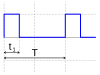
Pulse: Here's a sound that's a bit more harsh - by quickly alternating between the top and bottom of the wave, this makes what looks like a castle's crenellations and sounds like a hollow, blippy (or bloopy in the lower frequencies - it's important to get this terminology correct) note!

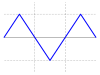
Triangle: Similar to the sine wave, except instead of curves it has straight lines. This gives a slight edge to the sound, but not as much as a...

Sawtooth: This is the harshest sounding wave, ramping up then sharply down and resulting in a piercing and powerful sounding wave that can be manipulated into all kinds of brilliant lead synth sounds.


Some useful techniques

Just so you're prepared to take on the world of oscillators, here are 3 useful techniques to remember when using them...

1. Using multiple oscillators and detuning them slightly can make a very powerful synth sound - this is great for those huge trance lead synths or some dirty drum and bass basslines.

2. Don't just settle for the oscillator on its own without experimenting; try playing with filters, distortion and other effects to get it sounding better!

3. If you really want to master oscillators, try producing some chiptune - this genre of music forces you to strip things down to the bare minimum and you'll find yourself using simple waves time and again!

Thursday, 11 February 2010

History of the Theremin

When you think of electronic music, it conjures up images of big beats, layered synths and auto tune heaped on with an oversized ladle, but it all had to start somewhere.

One of the first instruments to make controlled noise out of volts was the Theremin in 1920 - and you didn't even have to touch it to hear how ground-breaking it was...

Back in the USSR...

The story starts in Saint Petersburg in the Russian Empire.   A child genius, Lev Sergeyevich Termen was born.   He later became known as Léon Theremin, presumable for two reasons:

1) Men with acute és in their names are always a hit with the ladies
2) He invented an instrument he called the "Theremin"

Incidentally, he also invented "interlacing" - a technique of improving the quality of video signals (which has been used in TVs the world over) and the eerily named "The Thing" - basically a bugging device used by spies.   Ol' Léon knew how to impress!

In fact, he managed to impress Lenin so much that he was able to go on tour around the world to show off his technological masterpiece with the haunting sound, in an effort to impress everyone with how advanced the latest soviet technology was.

The instrument struck a chord (well, a single note - Theremins can't make chords) with sci-fi film producers, and they became forever associated with badly-piloted UFOs in old movies.  The spooky sound of the Theremin is sure to have you looking for the DVD of "The Day the Earth Stood Still".

So how does it work?

I suppose now would be a good time for a quick explanation - the Theremin works by using two hands - one controlling pitch and the other controlling volume.   The closer the hands are to the two metal antennas, the higher the pitch and the lower the volume respectively.

This means that technically, the player never has to touch the instrument in order to be able to be an expert at it!


Back to the story...

Theremin's invention did not prove a commercial success, but it amazed audiences and built up a niche following, which was maintained throughout the 20th century, through the second world war and eventually an enthusiast who built Theremins as a high-school student went on to invent a revolutionary synthesizer.   You may have heard of the guy - does the name "Robert Moog" ring any bells?

But yes, the popularity of the instrument remained underground (as did Léon Theremin, in a prison camp in Siberia) but resurfaced when in the mid 90s, a film called "Theremin: An Electronic Odyssey" brought it back into the eye of the mainstream and since then it has been used by all and sundry, from Bill Bailey to Portishead.

And that brings us to now - the Theremin has enjoyed another resurgence in popularity thanks to YouTube, with millions upon millions of views on pieces played by Theremin players.   The instrument still has a hardcore group of enthusiasts who advocate building your own instrument, though they are often marketed as toys just as often as real instruments.

So I guess there's one thing we've learned from the history of the instrument - you can't touch the theremin when it comes to making haunting electronic music!

Thursday, 21 January 2010

What is Classical Music, Anyway?

There is a very common misconception among musicians that haven't had any formal musical training.  

Many people hear something with an orchestra or fiddly piano in and will confidently tell you "That's classical music!"   I know I was guilty of doing so; but in a lot of cases, it might not be.   Classical music is more specific than that - let's ask some questions...

What's it all about?

Classical music is generally instrumental - It is considerably simpler than other forms of similar genres such as baroque and romantic, with usually a light, chordal undertone and a melody on top.  

You're likely to find the piano as the main solo instrument, but later in the classical era things became more powerful, with heavy programmed beats and dirty Reese bass synths (Not really, but it was more powerful.)


When was it created?

Although lots of people use classical music to describe anything that has an orchestral element to it, the actual classical music period was from 1730 to about 1820.  

The transition from Baroque (which was popular before classical) to classical began in Italy, where the snappily-named Domenico Scarlatti brought his unique musical style to the world, but other composers such as Gluck and C.P.E. Bach (the 2nd son of Johan Sebastian Bach) are more widely accepted as the people who originated the genre.

How did it get popular?

From about 1730 to 1750, the popular audience hungered for something new - something different to the baroque sounds of yesteryear, something that was being provided by the new "Classical" style (Ironic, right?).   Yes, they called it classical back then - it was part of the wave of "Classicism" which was becoming popular at the time, where they tried to emulate the architecture of ancient Greece.  

When composers like Joseph Haydn came out, this cemented the style in people's minds - and as even more popular composers succeeded him (Mozart and later Beethoven) the style became conventional.  

Why did it die out?


As with most genres of music - it became old fashioned.   People once again wanted something new.   Mozart had re-introduced the world to more minor keys and shown them that major, happy sounding music isn't the only style in existence.  

Composers Beethoven evolved music into it's next popular genre - "Romantic music".   Just as Classical music followed "Classicism", Romantic followed "Romanticism" - a new philosophy that emphasized the power of powerful emotion.  This can definitely be heard in Romantic music, where lots of minor keys made for powerful, emotive music.   Remember the song "Ride of the Valkyries"?   That's a great example.

Where did it go?


After it died out, Classical music laid low for a while, drinking in seedy bars and not drawing too much attention to itself until in the 20th Century, when the "Neoclassical" genre popped up, with proponents such as Stravinsky bringing it into the public eye.  

Since then, classical music has been used heavily in movies and TV to reflect different emotions and set different scenes.   Its heavily instrumental approach makes it ideal for backing music and scientific research has proven that it temporarily boosts children's IQs by 8 or 9 points on average, which is seriously cool.   It apparently improves "spatial-temporal reasoning", where you can visualise things over a period of time.  

And that about covers it!   From early, simple and catchy compositions to the evolution of the epic pieces by Mozart and Beethoven.   Classical music will no doubt be thrust upon your ears when watching movies and it will continute to reflect the sense of order and harmony from times gone by... until someone decides to invent "NeoNeoClassical music" and it all becomes popular again.

Friday, 15 January 2010

Top 5 Massive Hits that sampled Massive Hits


How often have you heard a song on the radio and heard a song you like... only to hear someone else singing over the top of it?

Recycling hits has become an increasingly popular past time for producers and here are 5 of the biggest hits that sampled other big hits!


5. Rihanna - SOS
Sampled: Soft Cell - Tainted Love

How many of the people listening to Rihanna's huge hit know it was lifted from 1980s English synth pop duo "Soft Cell"'s number 1 charting hit "Tainted Love" - itself a cover of a song by Gloria Jones.    The original was written by "Ed Cobb" in 1964 - it's gone from motown to electro pop to... uh... even electro-er pop?


4. Jason Derulo - Whatcha Say
Sampled: Imogen Heap - Hide and Seek

Jason Derulo's debut hit the number 1 spot in America, but that was in no small part attributed by many to the heavy sampling of Imogen Heap's minimalistic "Hide and Seek".


3. Jay-Z - Izzo (H.O.V.A)
Sampled: Jackson 5 - I want you back

The song that brought the words "Shizzle" and "Sheezy" to wannabe gangsters the world over samples the hit from the king of pop's original band.   While this version discusses Jay's career as a drug dealer in earlier life, the original was slightly more upbeat story.

Incidentally, this was produced by Kanye West - a guy who has a tendency to heavily sample other hits to make even bigger hits as we'll soon see...


2. Eminem - Stan
Sampled: Dido - Thank You

Eminem's critically acclaimed song "Stan", a song about a disturbed and scarily obsessive fan was made considerably more accessible by the addition of Dido's verse lyrics from her song "Thank You".

Stan became a number 1 before Thank You became a massive hit, making this one of the few songs to become a hit after the song that sampled it!


1. Kanye West - Stronger
Sampled: Daft Punk - Harder, Better, Faster, Stronger

Kanye struck it big, going from rap megastar to pop megastar with his smash hit "Stronger", which sampled Daft Punk and even featured them in the video.

However, Daft Punk can't exactly talk since they sampled "Cola Bottle Baby" by Edwin Birdsong for their song - so this is actually a sample of a sample, clearly meaning it should be at number one on this list.